Chengdu travel guide
Best Street Food in Chengdu: What & Where to Eat
Chengdu eats at street level: dan dan noodles (¥10–15), chuanchuan skewers (¥1–3 each), mapo tofu and hotpot (¥80–150 per person). The best hunting grounds are the fringes of Jinli and Kuanzhai Alley, Kuixinglou street, and the stalls outside university gates. Two words open every kitchen: wei la (微辣) — a little spicy.
Why Chengdu is China’s food capital
UNESCO named Chengdu a City of Gastronomy — the first in Asia — and the designation fits. Sichuan cooking runs on chilli and huajiao (Sichuan pepper, the source of the famous numbing ma la sensation), and the city eats constantly: breakfast noodles, teahouse snacks at 4pm, hotpot at midnight. Prices stay low because the competition at street level is relentless.
The dishes to chase
Dan dan noodles (担担面)
The city’s signature bowl: wheat noodles, chilli oil, minced pork, crushed peanuts and that numbing pepper hum. ¥10–15 at any noodle shop; the small bowls outside metro exits at breakfast are the benchmark.
Chuanchuan (串串)
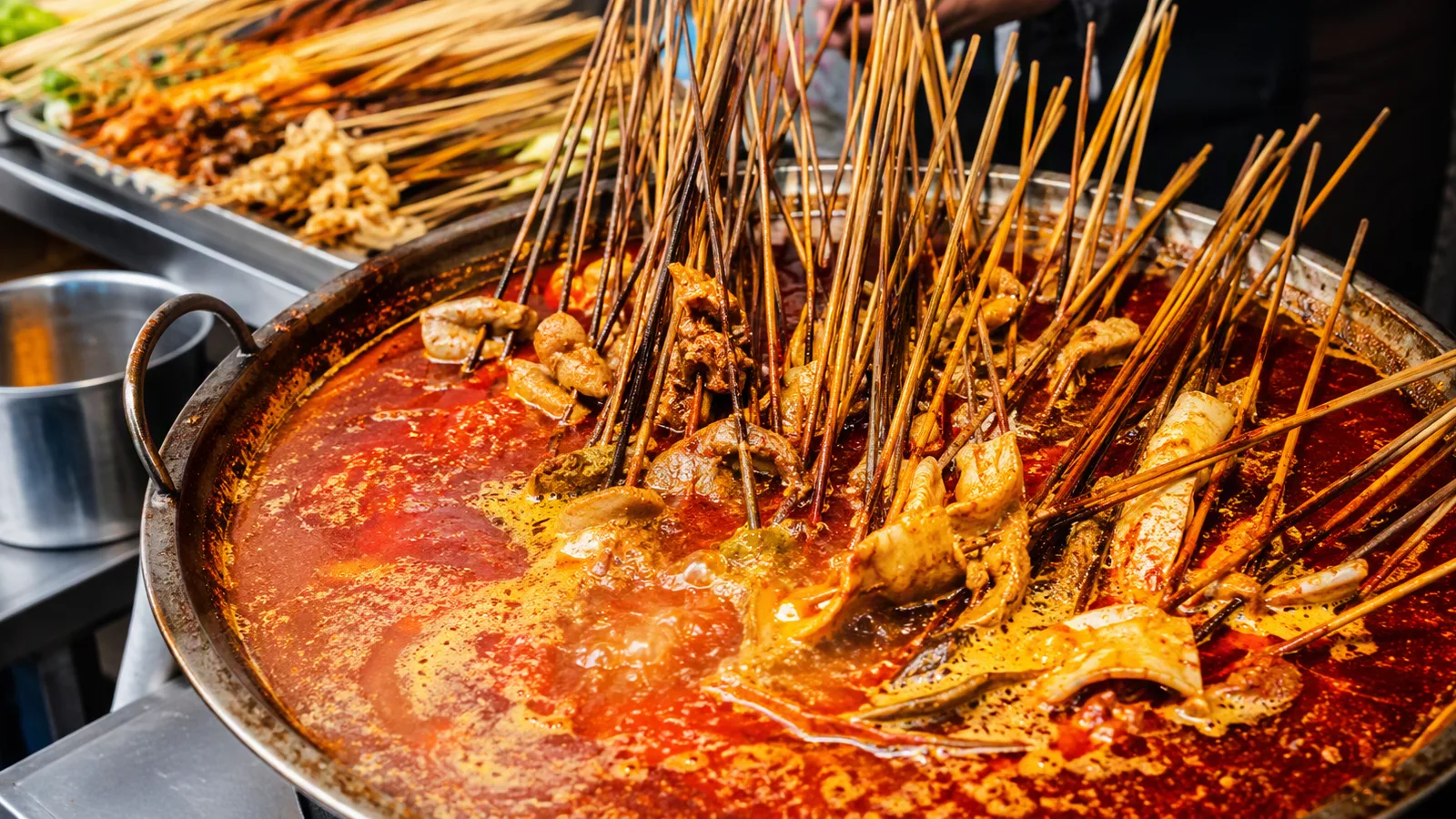
Skewers of everything — beef, lotus root, quail eggs, tofu skin — cooked by you in a communal pot of chilli broth and counted by the stick at the end (¥1–3 each; ¥30–60 feeds one person well). The most democratic meal in China.
Hotpot (火锅)
The social main event: a bubbling pot split between clear and ma la broths, plates of thin beef, tripe, duck intestine and greens to dip. ¥80–150 per person in a mid-range house. Order the yuanyang (split) pot if your table disagrees about heat.
Mapo tofu (麻婆豆腐)
Silken tofu in a fierce red sauce of bean paste, chilli and huajiao — born in Chengdu and still best here. ¥20–35 as part of a shared meal in any fly restaurant (苍蝇馆子, the beloved hole-in-the-wall category).
Rabbit heads (兔头)
The local delicacy that tests visitors: braised rabbit heads, spiced and cracked open for the cheek meat. ¥8–15 each at snack counters. Worth trying once; locals eat them like wings.
Teahouse snacks
In People’s Park and Heming teahouse: sunflower seeds, peanuts and bottomless jasmine tea (¥15–30 all afternoon), with optional ear-cleaning from the roaming technicians.
Where to eat
Jinli and Kuanzhai Alley fringes: the old-town lanes are touristy at their cores but the side alleys hold solid skewer and snack stalls. Kuixinglou street (near Kuanzhai): a local favourite strip of small restaurants and fly restaurants. University gates (Sichuan University, Southwest Minzu): the cheap-eats belt — students keep prices honest, ¥10–25 a meal. Yulin in the south: barbecue and late-night chuanchuan.
How to order
Point, hold up fingers, or scan the QR menu and use a translation app — English menus are rare outside hotel zones. The key phrase: wei la (微辣, mildly spicy). Saying bu yao la (不要辣) gets you no chilli at all, which in Chengdu is only half the dish. Pay by scanning the QR code on the table with Alipay or WeChat Pay; cash works at stalls.
Also in China

Chengdu food — FAQs
Is Chengdu food too spicy for visitors?
Not if you say wei la (微辣) — a little spicy. Kitchens calibrate for tourists constantly. The ma la numbing sensation surprises more than the heat, and the split (yuanyang) hotpot lets you retreat to the mild side.
How much does a meal cost in Chengdu?
Noodles or skewers ¥10–25, a fly-restaurant spread ¥30–60 per person, hotpot ¥80–150. Chengdu is one of China’s cheapest cities to eat well in.
Last reviewed and updated: by the AmazingAsia editorial team. See our editorial policy.