City guide
Beijing Travel Guide: Seven hundred years of empire, and duck for dinner
Beijing is China’s capital and its imperial showpiece — home to the Forbidden City, the Temple of Heaven, the Summer Palace and the last hutong lanes, with the Great Wall within day-trip reach. September–October and April–May are the best times to visit.
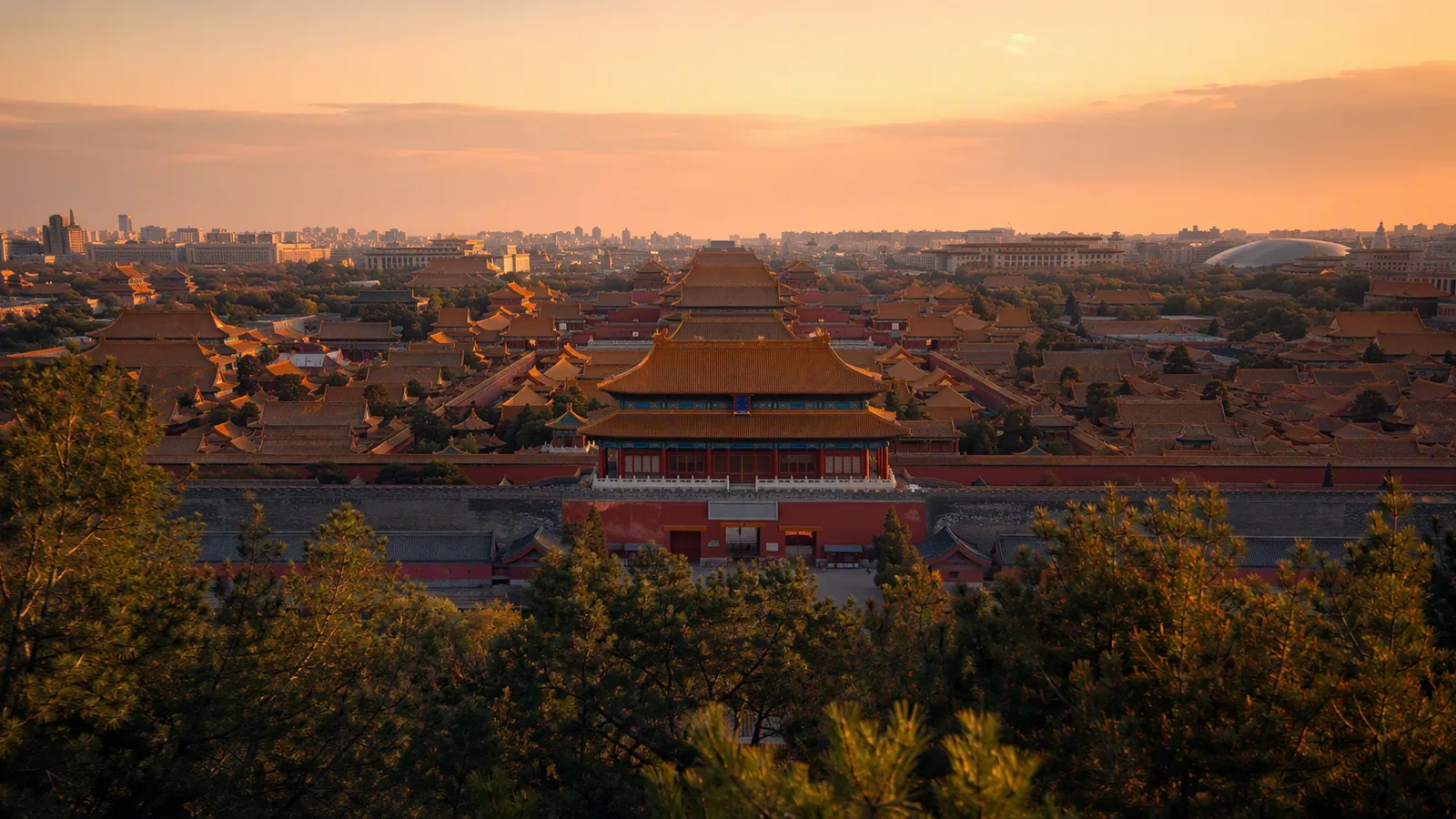
Beijing at a glance
| Timezone | CST (UTC+8) |
|---|---|
| Currency | Renminbi (CNY, ¥) |
| Languages | Mandarin |
| Population | 22 million |
| Coordinates | 39.9042, 116.4074 |
Why visit Beijing
Beijing has been China’s capital on and off for 700 years, and it shows: the Forbidden City’s golden roofs, the Temple of Heaven’s perfect geometry, the Summer Palace’s lakeside pavilions and the last surviving hutong lanes all sit inside one modern megacity. It is also the jumping-off point for the Great Wall, and one of Asia’s great eating cities — from ¥20 noodles to the ritual of a full roast duck dinner.
Top sights in Beijing
The Forbidden City (¥60 April–October, ¥40 in winter, closed Mondays) is China’s essential sight: allow half a day, book tickets online days ahead in your passport name, and exit north to climb Jingshan Park (¥2) for the classic rooftop panorama. The Temple of Heaven (combined ticket around ¥34) rewards an early start, when locals fill the park with tai chi, card games and opera singing. The Summer Palace (¥30, more for the full ticket) is an imperial lakeside retreat best seen by boat and foot combined.
Of the Great Wall sections near Beijing, Mutianyu (about 90 minutes from the centre, entry around ¥40 plus shuttle and optional cable car) is the best balance of scenery and access; Jinshanling and Jiankou suit hikers chasing wilder, unrestored stretches. Back in town, walk the hutongs around the Drum and Bell Towers and Houhai lakes, and leave an afternoon for the 798 art district’s galleries in old factory halls.

When to visit Beijing
September and October are Beijing’s finest months — warm, dry days and clear skies — with April and May a close second. Summers (June–August) are hot, humid and stormy; winters (December–February) are dry, sunny and genuinely cold, with January highs around 2°C. Spring occasionally brings sandstorms from the northern deserts. See the country-wide month-by-month weather guide for the bigger picture.
Where to stay in Beijing
First-timers do best in Dongcheng, the district around Wangfujing and the Forbidden City’s east gate — walkable to the main sights and threaded with metro lines. The hutong areas around Gulou (the Drum Tower) offer courtyard hotels and guesthouses with real character, from around ¥300 a night for a renovated siheyuan room. Sanlitun suits night owls and business travellers, with international hotels and the city’s busiest bar strip. Budget beds in hostel dorms run ¥70–120; mid-range hotels across the centre ask ¥400–700.

Getting there and around
Beijing has two airports: Capital (PEK) in the northeast and the vast Daxing (PKX) in the south — both connect to the city by airport express metro lines from around ¥25–35. The metro is the backbone of getting around: over 20 lines, English signage throughout and fares of ¥3–9. Didi rides across the centre rarely top ¥40. High-speed trains from Beijing South reach Shanghai in about four and a half hours (from ¥550 second class) and Xi’an in under five hours — book via the 12306 app or Trip.com, and bring the passport you booked with.
Food and drink in Beijing
Beijing roast duck is the headline act: at casual neighbourhood duck houses a bird with all the trimmings runs from around ¥100–150 per person, while the famous old establishments charge ¥250 and up. Beyond duck, the city runs on wheat — zhajiangmian (¥20–35 a bowl), dumplings, and jianbing crepes (¥8–15) from morning street carts. Lamb skewers and hotpot fill the winter nights, especially around the hutongs and Ghost Street (Guijie). A local beer with dinner costs ¥10–20 in restaurants; coffee in the growing café scene runs ¥25–40.
Day trips from Beijing
The Great Wall is the essential one: Mutianyu for views and cable cars, Jinshanling for a half-day hike between watchtowers. The Ming Tombs combine easily with a wall visit on the same northern road. Chengde’s mountain resort (a UNESCO-listed imperial summer retreat) is reachable in about an hour by high-speed train, and the port city of Tianjin makes an easy half-hour rail hop for its colonial-era concessions.
Beijing travel costs
Beijing is mid-priced by Chinese standards and cheap by international ones. Sightseeing is remarkably affordable: the Forbidden City ¥60, Temple of Heaven ¥34, Summer Palace ¥30, Jingshan Park ¥2 and the Great Wall at Mutianyu about ¥40 plus transport — a full week of major sights costs less than one theme-park day elsewhere. Food spans ¥8 street breakfasts to ¥250 roast duck dinners; a satisfying local meal averages ¥30–60. The biggest variable is the bed: ¥70–120 for a dorm, ¥400–700 for a comfortable mid-range double, ¥1,000 and up for five-star luxury near Wangfujing or in the business district.
A three-day Beijing plan
Day one: the Forbidden City at opening time, exit north and climb Jingshan for the panorama, then walk the hutongs around the Drum Tower and Houhai lakes, finishing with a roast duck dinner. Day two: the Temple of Heaven at tai chi hour, the Summer Palace after lunch, and the Olympic Park or a hutong bar by night. Day three: the Great Wall at Mutianyu — go early, walk the ridge between towers 14 and 20, and be back in town for dumplings. With a fourth day, add the 798 art district, the Lama Temple or a cooking class.
Practical tips for Beijing
Almost every major sight now requires advance online booking in your passport name — the Forbidden City in particular sells out days ahead in season, so book the moment your dates are fixed. Carry your passport everywhere; it is scanned at sights, stations and hotels. Most museums close on Mondays. Winter visitors should pack serious layers but get blue skies in return; summer visitors should sightsee early and retreat indoors at midday. Alipay or WeChat Pay linked to your card will cover almost every transaction.
Also in China
Beijing travel questions
How many days do you need in Beijing?
Three full days covers the essentials — one for the Forbidden City, Jingshan and the hutongs, one for the Temple of Heaven and Summer Palace, and one for a Great Wall day trip. A fourth day lets you slow down, add the 798 art district or simply eat your way around the hutongs.
Which Great Wall section is best from Beijing?
Mutianyu is the best all-rounder: restored ramparts, mountain views, a cable car and fewer crowds than Badaling, about 90 minutes from central Beijing. Hikers prefer Jinshanling for its half-restored watchtowers, while Badaling is the easiest to reach by public transport but the busiest.
Last reviewed and updated: by the AmazingAsia editorial team. See our editorial policy.