City guide
Xi'an Travel Guide: Two thousand years of history, served with noodles
Xi’an is China’s ancient capital — home of the Terracotta Army, a complete Ming city wall and the Muslim Quarter’s food lanes, and the eastern end of the Silk Road. April–May and September–October are the best times to visit.
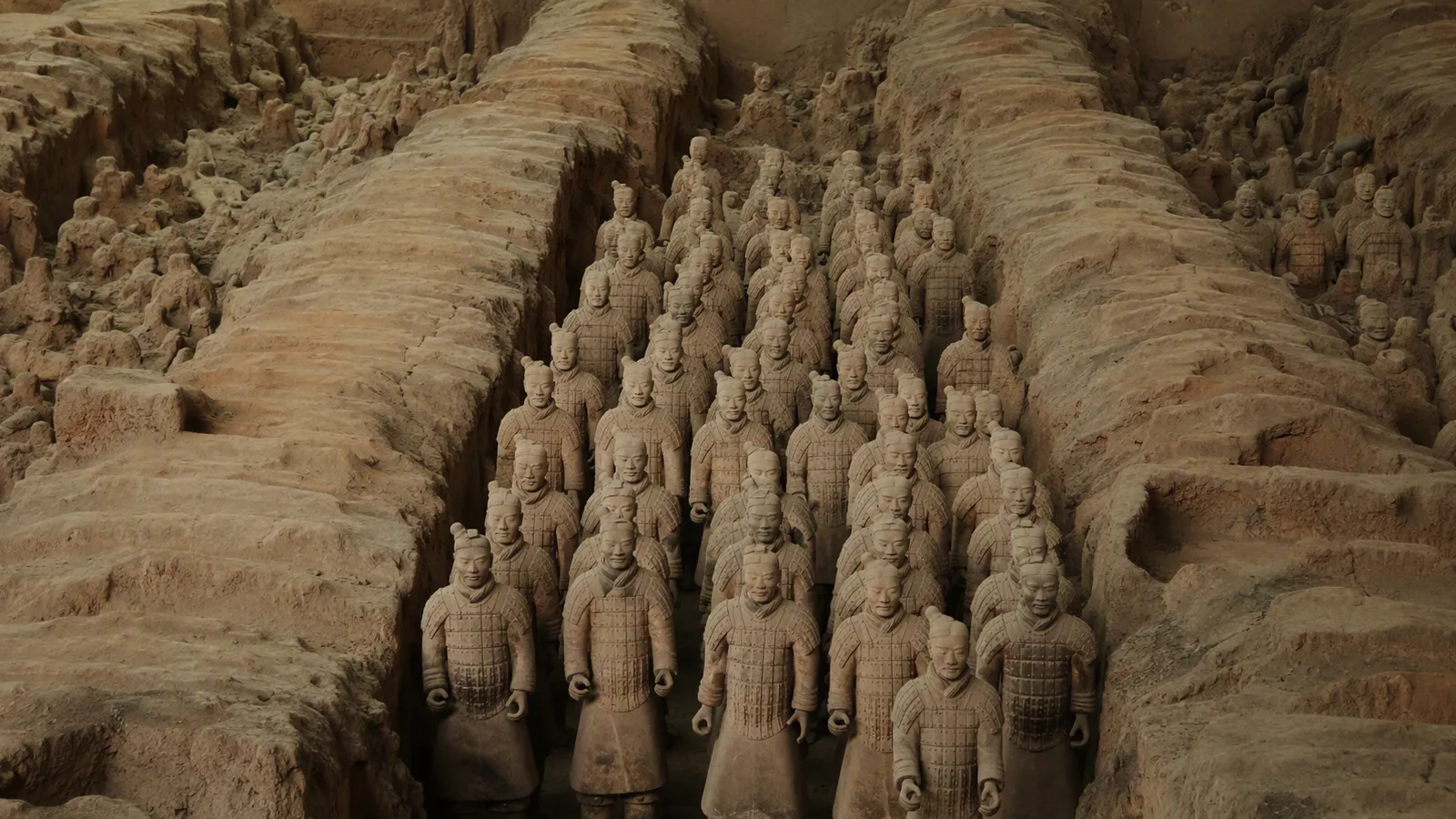
Xi’an at a glance
| Timezone | CST (UTC+8) |
|---|---|
| Currency | Renminbi (CNY, ¥) |
| Languages | Mandarin |
| Population | 13 million |
| Coordinates | 34.3416, 108.9398 |
Why visit Xi’an
Xi’an is where Chinese history begins and ends: capital to thirteen dynasties, eastern terminus of the Silk Road, and home of the Terracotta Army — thousands of life-sized soldiers buried with China’s first emperor more than 2,200 years ago. The modern city is wrapped in a complete Ming-era wall you can cycle, and its Muslim Quarter serves some of the country’s best street food. No first trip to China is complete without it.
Top sights in Xi’an
The Terracotta Army (¥120) lies about an hour east of the centre: three excavation pits plus a museum, with Pit 1’s ranked infantry the unforgettable sight. Go early, before the tour buses, and allow half a day including the shuttle bus between pits and the mausoleum site. The City Wall (¥54) encircles the old town for 14km — walk a section or rent a bike (extra, roughly ¥45 for two hours) and ride the full loop above the rooftops, ideally late in the day when the lanterns come on.
Inside the wall, the Muslim Quarter is a maze of food lanes around the Great Mosque (small entry fee), one of China’s oldest and most unusual, built in Chinese temple style. The Big Wild Goose Pagoda (around ¥40 to climb) anchors a huge plaza with a free evening fountain show, and the Shaanxi History Museum (free, reserve days ahead) holds the dynasty-spanning collection that explains why this city mattered. The Bell and Drum Towers (small entry fees) mark the old centre.

When to visit Xi’an
April–May and September–October are the sweet spots: mild, relatively dry and clear. Summer (June–August) is hot and dusty, with July highs above 32°C; winter is cold and dry, dipping below freezing at night, though crowds thin and prices soften. The month-by-month China weather guide compares every region.
Where to stay in Xi’an
Stay inside the wall near the Bell Tower for the classic Xi’an experience — the Muslim Quarter, both towers and the south gate are walkable, and metro line 2 runs beneath. The area around Yongningmen (the south gate) mixes boutique hotels with easy wall access. South of the wall, Dayanta near the Big Wild Goose Pagoda is quieter and handy for the Shaanxi History Museum. Hostel dorms run ¥60–110, mid-range doubles ¥300–600.

Getting there and around
Xi’an Xianyang Airport (XIY) sits about 40km northwest, linked to town by airport metro and bus lines. Xi’an North is one of China’s great high-speed rail hubs: Beijing in four and a half to six hours, Chengdu in around three, Shanghai in six to eight. Within the city the metro reaches the Bell Tower, both pagodas and the north station (¥2–8); buses and Didi cover the Terracotta Army run, though the easiest option is the dedicated tourist shuttle from the railway area or a hired car for the day.
Food and drink in Xi’an
Xi’an’s kitchen is wheat-and-lamb Shaanxi cooking with strong Hui (Chinese Muslim) influence. Roujiamo — braised meat in baked flatbread, often called a Chinese burger — costs ¥10–15; biangbiang noodles, wide hand-pulled belts with chilli oil, run ¥15–25; yangrou paomo (lamb soup with crumbled bread, ¥30–40) is the dish locals queue for. The Muslim Quarter’s lanes grill skewers, press pomegranate juice and bake persimmon cakes deep into the night — graze rather than sitting down to one meal. Beer with dinner is ¥8–15.
Day trips from Xi’an
Mount Hua (Huashan), one of China’s five sacred mountains, is 30–40 minutes away by high-speed train to Huashan North: granite peaks, vertiginous plank paths and temples on knife-edge ridges — take the cable car up if you value your knees. Closer in, the Hanyangling mausoleum displays a second, Han-dynasty terracotta army in a superb underground museum near the airport road.
Xi’an travel costs
Xi’an is cheaper than Beijing or Shanghai across the board. The big ticket is the Terracotta Army at ¥120 — worth every yuan — with the City Wall ¥54, the Big Wild Goose Pagoda around ¥40 and the Shaanxi History Museum free with a reservation. Street food keeps eating costs low: ¥10–15 snacks add up to dinner for under ¥40, and even a sit-down paomo restaurant meal rarely tops ¥50 per person. Dorm beds run ¥60–110, mid-range doubles ¥300–600 and heritage-style courtyard hotels inside the wall from around ¥500.
A two-day Xi’an plan
Day one: out early to the Terracotta Army — pits first, museum second — back by mid-afternoon for a rest, then into the Muslim Quarter as the grills light up, ending at the Drum Tower square. Day two: the Shaanxi History Museum at opening, the Big Wild Goose Pagoda after lunch, then onto the City Wall by late afternoon for a sunset cycle around the ramparts. With a third day, take the high-speed train to Mount Hua or visit the Hanyangling tomb on the way to or from the airport.
Practical tips for Xi’an
Reserve the Shaanxi History Museum and Terracotta Army tickets online in advance in season — both cap daily entries and require your passport. The warriors are indoors, so they make a good bad-weather day; save the wall for clear evenings. The Muslim Quarter is at its best after dark. If you are continuing west along the Silk Road, sleeper trains to Lanzhou and Dunhuang turn travel days into hotel nights.
Also in China

Xi’an travel questions
Is the Terracotta Army worth it?
Yes — it earns its reputation. Pit 1’s ranked formations of life-sized soldiers, each with individual features, are one of the great archaeological sights anywhere. Go early to beat the tour groups, and include the museum halls and the emperor’s mausoleum shuttle in your half-day.
How many days do you need in Xi’an?
Two full days: one for the Terracotta Army plus the evening Muslim Quarter, one for the city wall, pagoda and Shaanxi History Museum. Add a third for Mount Hua or the Hanyangling tomb.
Last reviewed and updated: by the AmazingAsia editorial team. See our editorial policy.