Xi'an travel guide
Best Street Food in Xi'an: What & Where to Eat
Xi’an’s essential street foods are roujiamo (braised-meat flatbread, ¥10–15), biangbiang noodles (¥15–25), yangrou paomo lamb soup (¥30–40) and cumin lamb skewers (¥2–5 each). The Muslim Quarter’s lanes are the epicentre — go hungry, go late, and graze rather than sitting down to one meal.
The dishes to look for
Roujiamo (肉夹馍)
Often called the Chinese burger: slow-braised pork (or beef in the Muslim Quarter) stuffed into a crisp baked flatbread. ¥10–15 from window shops — the bread should shatter slightly at the edges.
Biangbiang noodles (biangbiang面)
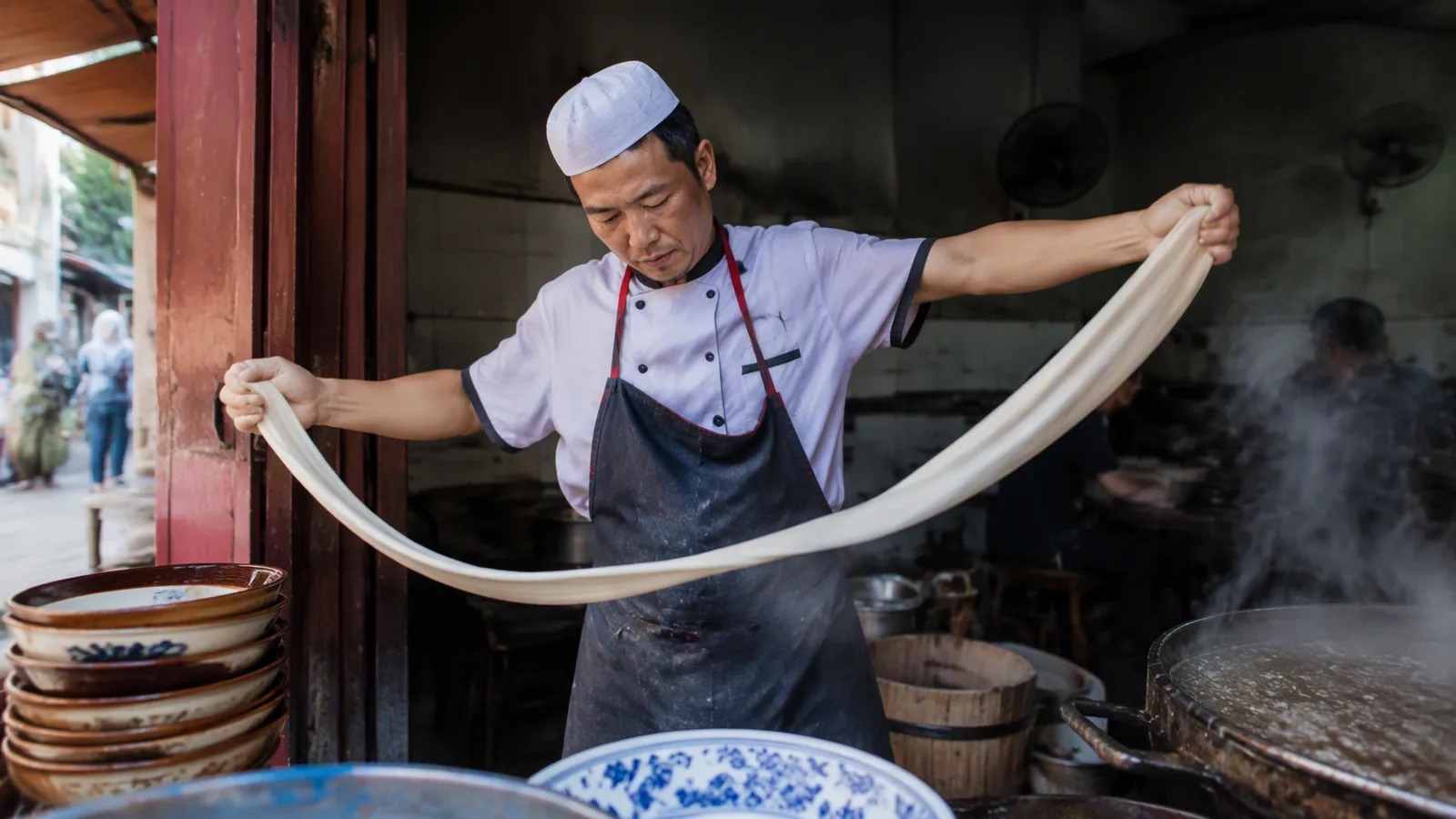
Wide hand-pulled noodle belts — the character is so complex it cannot be typed — slapped loud against the counter, then dressed with chilli oil, garlic and vinegar. ¥15–25 at noodle shops across the city.
Yangrou paomo (羊肉泡馍)
Xi’an’s signature ritual: you tear your own flatbread into a bowl, and the kitchen floods it with rich lamb soup, noodles and meat. ¥30–40. Tear the bread small — fingernail size — like the locals do.
Liangpi (凉皮)
Cold steamed wheat noodles with cucumber, chilli and sesame — the city’s favourite warm-weather lunch, ¥8–15. Its cousin liangpi made from rice is softer and milder.
Skewers and grills
Cumin-dusted lamb skewers (¥2–5 each), grilled squid, and lamb spine hotpots line the Muslim Quarter after dark. Point, pay by QR, eat standing.
Sweet things
Persimmon cakes (¥3–5), eight-treasure rice porridge, fresh pomegranate juice (¥10–15 — Lintong, the Terracotta Army district, is pomegranate country) and rose-mirror cakes keep the sweet tooth busy between grills.
Where to eat it
The Muslim Quarter (the lanes north of the Drum Tower — Beiyuanmen and its side alleys) is the heart of it: busiest after 6pm, alive until late. Yongxingfang, near the wall’s east gate, recreates a Shaanxi snack street with every regional specialty in one tidy block — curated but genuine, good for a systematic tasting. Local morning markets serve hulatang (peppery soup) and fried dough to the neighbourhood before 9am.
Eating tips
Graze: order small, move often — the Quarter rewards ten stops over one big meal. Queues of locals are the only review system you need. Everything is QR or cash. The Muslim Quarter’s stalls are halal; pork dishes cluster elsewhere. Spice is assertive but not Sichuan-level; ask for bu la if you want none.
Also in China



Xi’an street food — FAQs
What food is Xi’an famous for?
Roujiamo (braised-meat flatbread), biangbiang noodles and yangrou paomo (lamb soup with hand-torn bread) are the big three — all wheat-and-lamb Shaanxi classics with strong Hui Muslim influence, and all under ¥40.
Is the Muslim Quarter touristy?
The main lane (Beiyuanmen) is busy with visitors, but the food is largely genuine and locals eat there too — especially in the side alleys like Dapiyuan. Go after dark, order small, and follow the queues.
Last reviewed and updated: by the AmazingAsia editorial team. See our editorial policy.