Asia travel guide
Japan or South Korea: Which Should You Visit?
Short answer: Japan for depth and variety — temples, Alps, onsen, refined food culture — at a higher price. South Korea for energy and value — Seoul's food and nightlife, fast rail, easier on the wallet. With two weeks, do both: they are two hours apart by air.
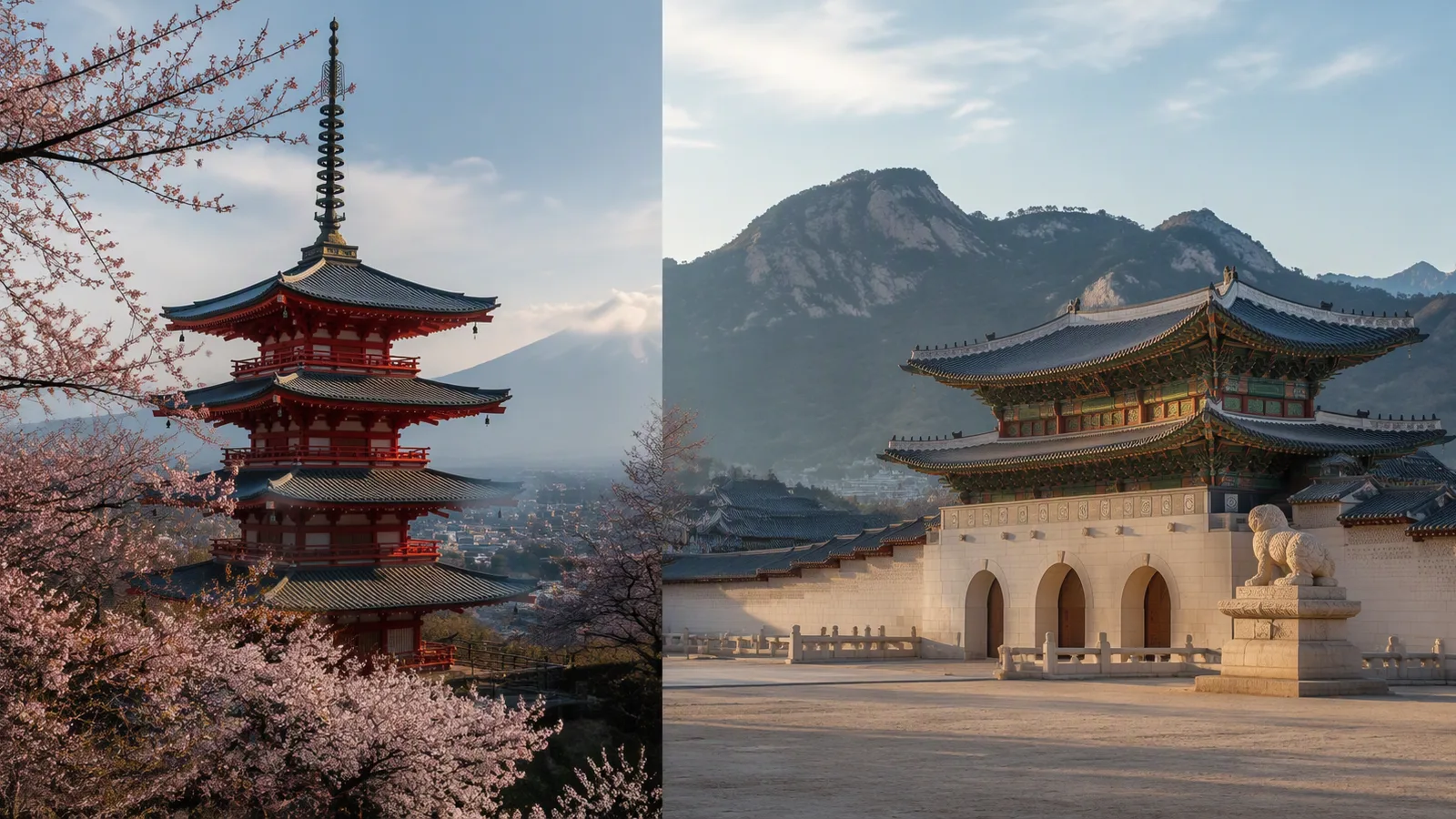
At a glance
| Daily budget (mid-range) | Japan ~25,000–35,000 yen (~A$250–350) · Korea ~150,000–220,000₩ (~A$160–230) |
|---|---|
| Signature experiences | Japan: temples, onsen, Alps, Kyoto lanes · Korea: palaces, BBQ, nightlife, Jeju |
| Getting around | Both superb: shinkansen vs KTX, IC cards everywhere |
| English friendliness | Good signage in both; English spoken more widely in Seoul than rural Japan |
| Best seasons | Both: spring (blossom) and autumn (foliage) |
Costs, honestly
South Korea is the cheaper trip, day for day. A sit-down BBQ dinner for two runs 40,000–60,000₩ (~A$42–63) against 5,000–8,000 yen (~A$50–80) for an equivalent spread in Japan. Business-class hotel rooms in Seoul average a notch below Tokyo. Street food is cheaper in both than any restaurant in Australia, but Korea’s markets (Gwangjang, Myeongdong) edge Japan’s on price. Where Japan claws it back: the quality floor is higher — even a station-basement lunch is reliably excellent.
Food and drink
Japan wins on range and refinement — sushi, ramen, kaiseki, a century of kissaten coffee culture. Korea wins on conviviality: BBQ built for groups, fried chicken and beer (chimaek), and a late-night food scene that outruns anywhere in Japan outside Osaka. Vegetarians find Japan easier to navigate than a decade ago but still trickier than Seoul, where temple cuisine and vegetable banchan help.
Sights and landscapes
Japan has the deeper bench: Kyoto alone justifies a trip, then Nara, Hiroshima, the Alps, Hokkaido powder. Korea concentrates its highlights — Seoul’s palaces, Gyeongju’s royal tombs, Busan’s beaches, Jeju’s volcano — and you can cover them in a week without rushing. Japan rewards slow travel; Korea rewards density.
Practicalities
Both run world-class rail: the shinkansen (see our Tokyo to Kyoto guide) and the KTX (Seoul to Busan) are each point-to-point easy. Australians get visa-free entry to both (Korea requires the K-ETA online authorisation; check current status before booking). Flights from Sydney or Melbourne: ~9.5–10.5 hours to Tokyo or Seoul, often similarly priced; Seoul–Tokyo hops run about two hours.
The verdict
First trip to North Asia, ten days or more, budget comfortable: Japan. A week or less, tighter budget, nightlife matters: South Korea. Two weeks and can’t decide: fly into Tokyo, out of Seoul (or reverse) — open-jaw fares rarely cost more than a return, and the middle hop is cheap and short. Start with our Japan guide or South Korea guide.
Keep planning North Asia


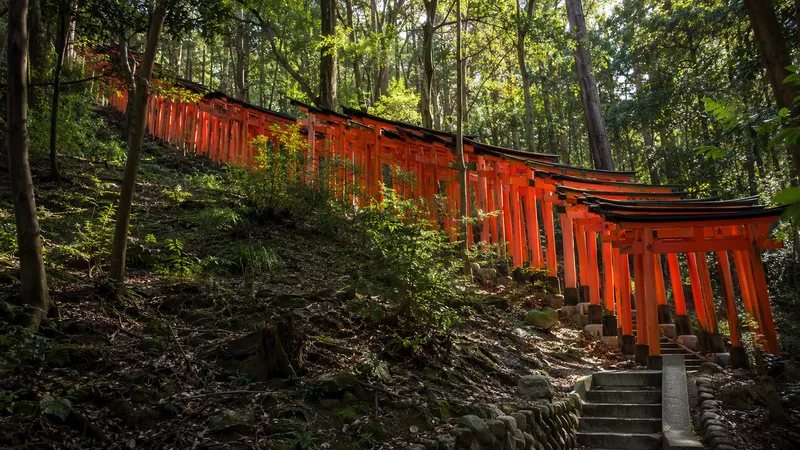
Japan vs South Korea — FAQs
Is Japan or South Korea cheaper to visit?
South Korea, by roughly 25–35% on a like-for-like mid-range day — hotels, BBQ dinners and transport all run lower. Japan's quality floor is higher, but its ceiling prices climb faster too.
Can I visit Japan and South Korea in one trip?
Yes — flights between Tokyo/Osaka and Seoul take about two hours and are plentiful and cheap. Two weeks split 8/6 between the countries works well with open-jaw tickets.
Which is better for a first trip to Asia?
Japan, if budget allows — its infrastructure, signage and sheer depth of sights make it the easiest deep-dive. South Korea is the better pick for a shorter, nightlife-heavy or budget-conscious trip.
Last reviewed and updated: by the AmazingAsia editorial team. See our editorial policy.